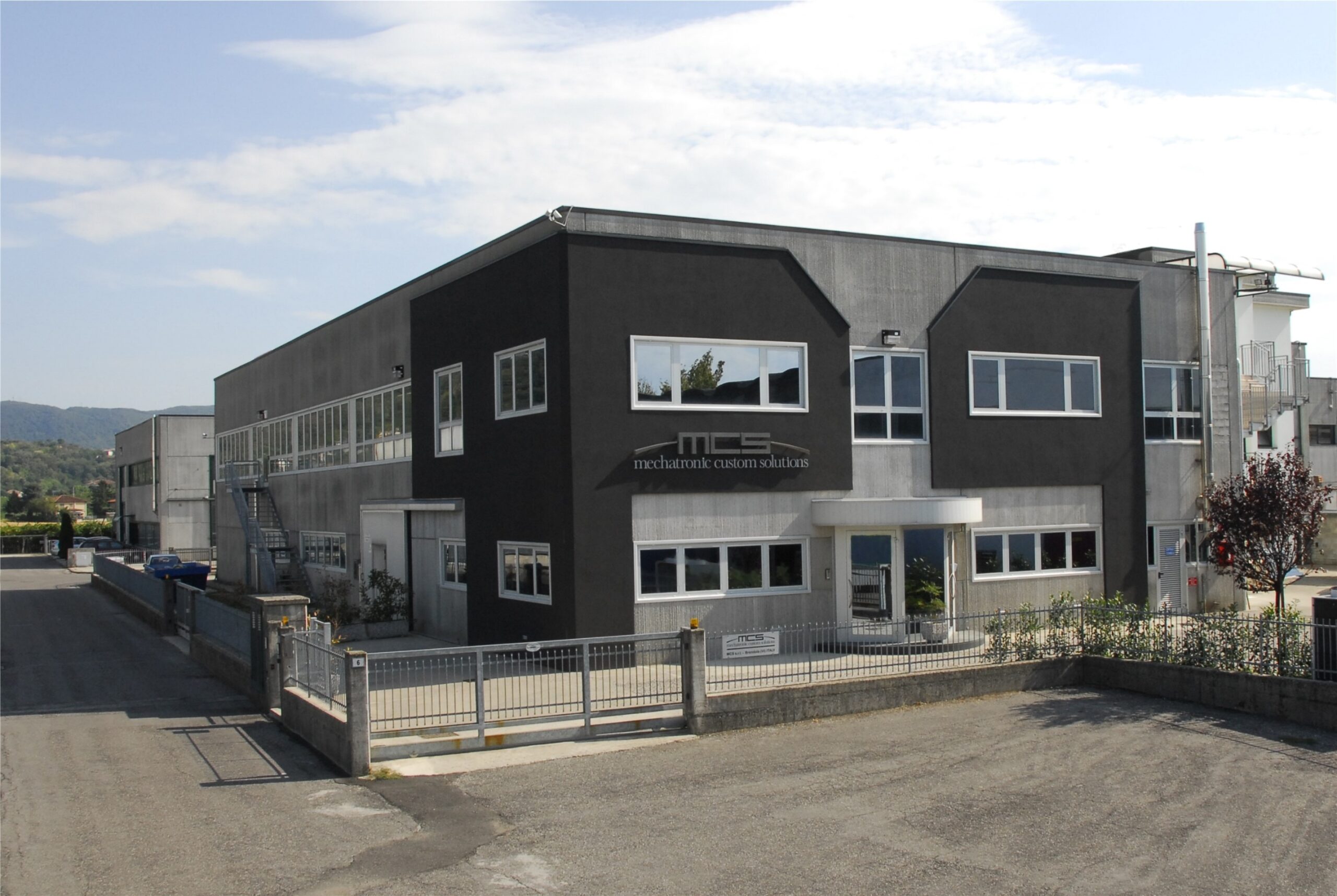
Giving new life to high-end technology: when obsolescence becomes an opportunity.
During the latest upgrade of our Cutting Department, an opportunity emerged that transformed a routine decommissioning process into a project of genuine social value.
Mr. Alessandro Vignaga, owner of MCS, explains how it all started: “Our Zund digital plotters, after twenty years of impeccable service, had become incompatible with modern operating systems but not at all with regard to functionality. When we talk about Zund, we’re talking about the Ferraris of the sector: Swiss machines that guarantee absolute precision and reliability in cutting technical materials such as graphic membranes switches, flexible circuits, gaskets, and double-sided adhesives.”
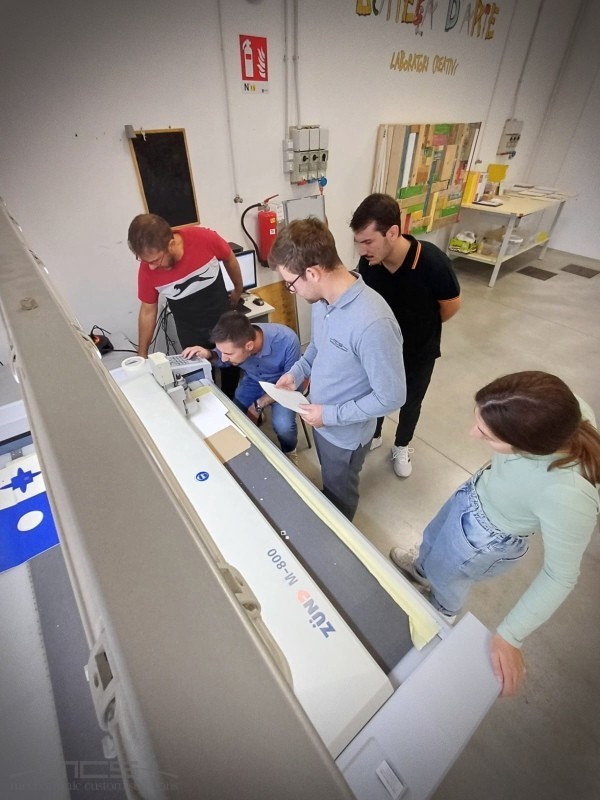
Zund Italia’s replacement program included a trade in value contingent upon the certified scrapping of the obsolete machines. A standard industry agreement yet one that opened the door to a much broader reflection.
“We scrapped the first machine as agreed,” Alessandro continues, “but then we started questioning the fate of the second one. It was still perfectly functional, capable of producing millimetre-precise cuts. Scrapping it felt like a real waste.”
The solution came through Giovanni Frison, a long-time member of our team. His daughter Miss. Valentina coordinates the Dueville branch of the social cooperative L’Eco Papa Giovanni XXIII. After carefully evaluating the machine’s potential applications, we proposed a change to the agreement with Zund Italia: instead of scrapping it, we asked to donate the machine to the cooperative.
The positive response from the Swiss supplier demonstrated a sensitivity that went far beyond a simple commercial transaction. “Zund Italia immediately understood the value of the initiative,” Mr. Vignaga underlines, “maintaining the financial terms of the agreement while allowing the machine to begin a new productive life in a socially meaningful context.”
Naturally, we did more than deliver the device: we transported it, installed it in their Art Workshop, and trained the operators until they felt fully confident using it. A proper and thoughtful handover.
Inclusion through Technology: A Reversed Paradigm in Social Cooperatives
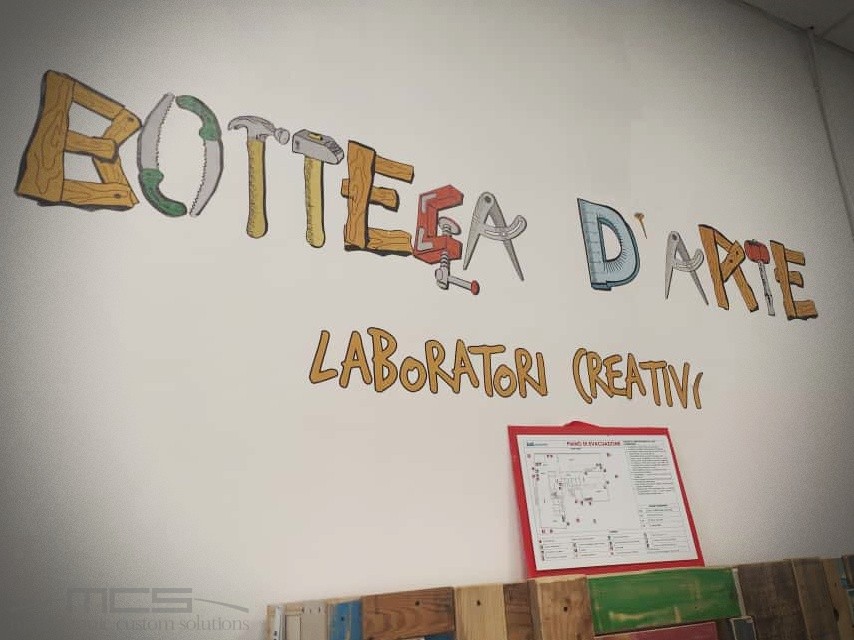
To fully understand the value of this donation, we conducted a short interview with Miss. Valentina Frison, coordinator of the Dueville branch of the cooperative L’Eco Papa Giovanni XXIII, an organisation that has been working for the inclusion of people with disabilities in the Vicenza area since 1983.
“We are a type-A social cooperative,” Valentina explains, “accredited by the Veneto Region and partnered with ULSS 8 Berica. Unlike type-B cooperatives, which focus on job placement, we work with people who require a higher level of support, offering educational activities ranging from art workshops to woodworking, from recycled-paper production to ceramics.”
But it is the concept of adulthood that truly defines their approach. The drawings created by their members are not simple “children’s artworks for the fridge,” but the starting point of a serious production process. Thanks to the plotter, those drawings are transformed into real, marketable products: envelopes, bookmarks, greeting cards. This process turns a creative act into a tangible contribution, instilling a sense of responsibility and commitment at every stage.
The machine is not just a cutting tool; it is a bridge toward adulthood. By automating the most technically challenging step, it allows each person to focus on the creative and productive process, taking responsibility for the final result just like any other artisan.
Technology as a Social Equalizer
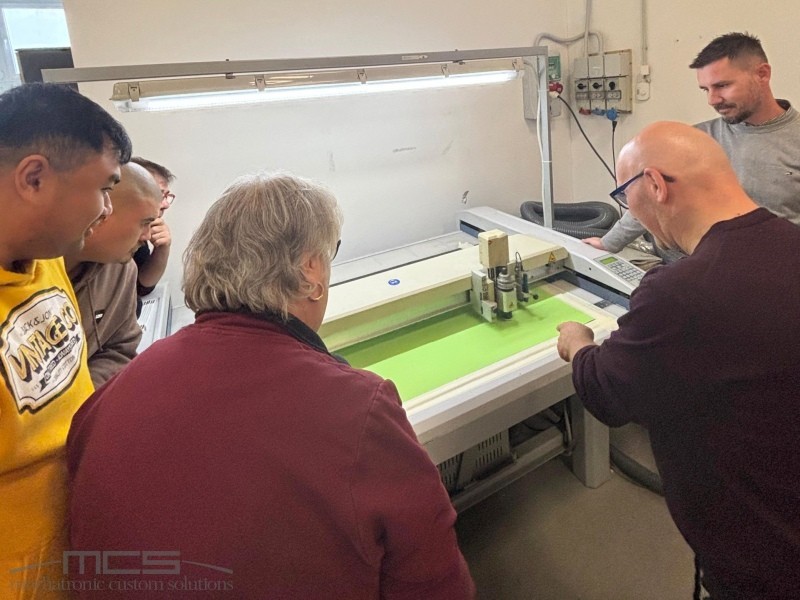
The digital plotter represents far more than simple production automation. Frison offers an enlightening comparison: “It’s like wearing glasses. They don’t give you anything extra, they simply put you on the same level as everyone else. That’s exactly what the plotter does: it’s a technological support that allows people with hand tremors or motor difficulties to cut with professional precision, to live and work alongside others, on equal footing.”
The impact is both practical and emotional. “There is a person with significant support needs,” she recalls, “who previously could only participate in limited phases of the production process. We digitised one of his drawings, the plotter performed the cutting, and he completed the assembly. When he saw the finished shopping bag, the ‘wow’ on his face said it all. It was his product, from idea to final packaging.”
From Assistance to Empowerment: A Reversal of Perspective
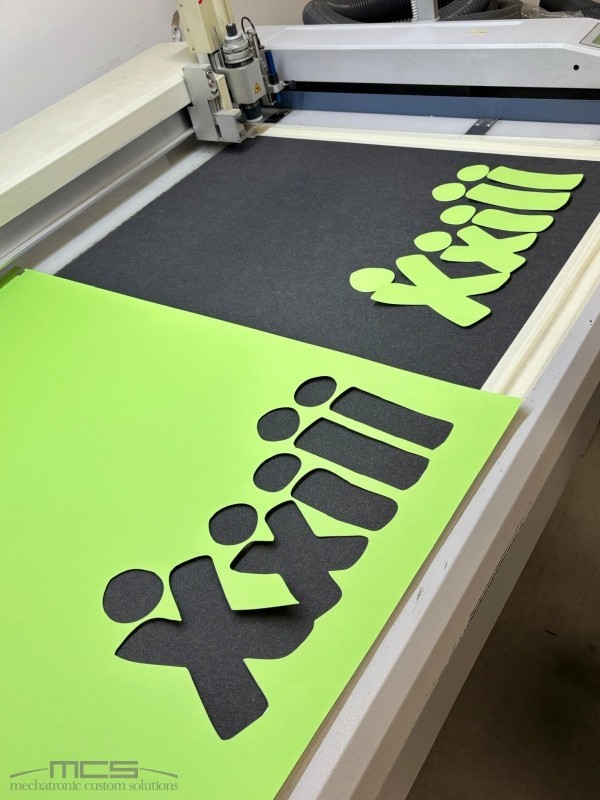
The real innovation does not lie in the technology itself, but in how it is used to overturn a traditional assistance based paradigm. “People with disabilities are often used to being ‘taken care of,’” Frison reflects. “Here, they become active citizens, resources for the community. Whether we produce packaging for local companies or solidarity favours, they are not receiving, they are giving.”
The plotter has accelerated this shift. Production times have shortened drastically, but the real change is qualitative: people can now focus on creativity, assembly, and meaningful tasks rather than struggling with imprecise cuts or material waste.
“It’s a multi-handed process,” Frison explains, “from shared design to prototypes, from production to sales. Just like any artisan workshop. The plotter doesn’t replace people; it allows them to express their potential.”
A Replicable Model of Social Circular Economy
This experience has prompted us to reflect. How many industrial machines are scrapped despite being perfectly functional, simply due to software incompatibility? And how many social cooperatives could benefit from technologies that, while no longer cutting-edge for industrial production, would represent an enormous qualitative leap for their activities?
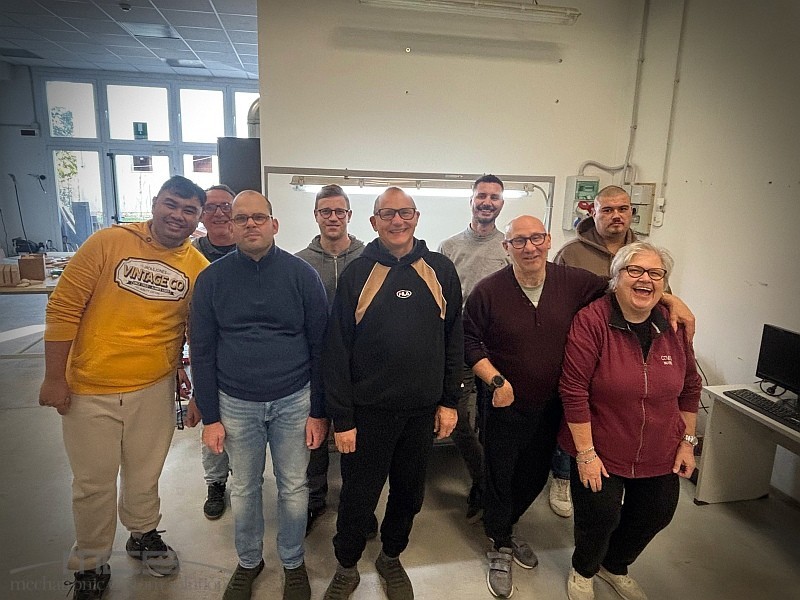
The collaboration between MCS, Zund Italia, and L’Eco Papa Giovanni XXIII demonstrates that technological obsolescence can become an opportunity for social development. All it takes is to look beyond the logic of “old equals useless” and ask: can this technology still be useful to someone?
True inclusion is not achieved through token tasks or decorative activities. It is built by providing professional grade tools that enable each person to express their potential, transforming disability from a limitation into a characteristic that simply requires the appropriate technological support. Just like a pair of glasses.
This is the kind of technology we believe in: the kind that includes rather than excludes. The kind that gives a second life not only to machines, but above all to people.